Does your Hartley home actually need a rewire?
Not necessarily — about 60% of Hartley homes with older wiring need some remedial work, with full rewires typically costing £2,500–£6,000 and taking 3–7 days.
We assess by inspection and testing rather than age alone. Properties with VIR, rubber or aluminium cabling, recurring tripping, damaged accessories, insufficient sockets or an outdated consumer unit are more likely to need work. VIR and rubber insulation can deteriorate; aluminium wiring needs careful attention to conductor condition, terminations and compatibility. Period and listed homes often require carefully planned work that protects original fabric while meeting current electrical safety requirements.
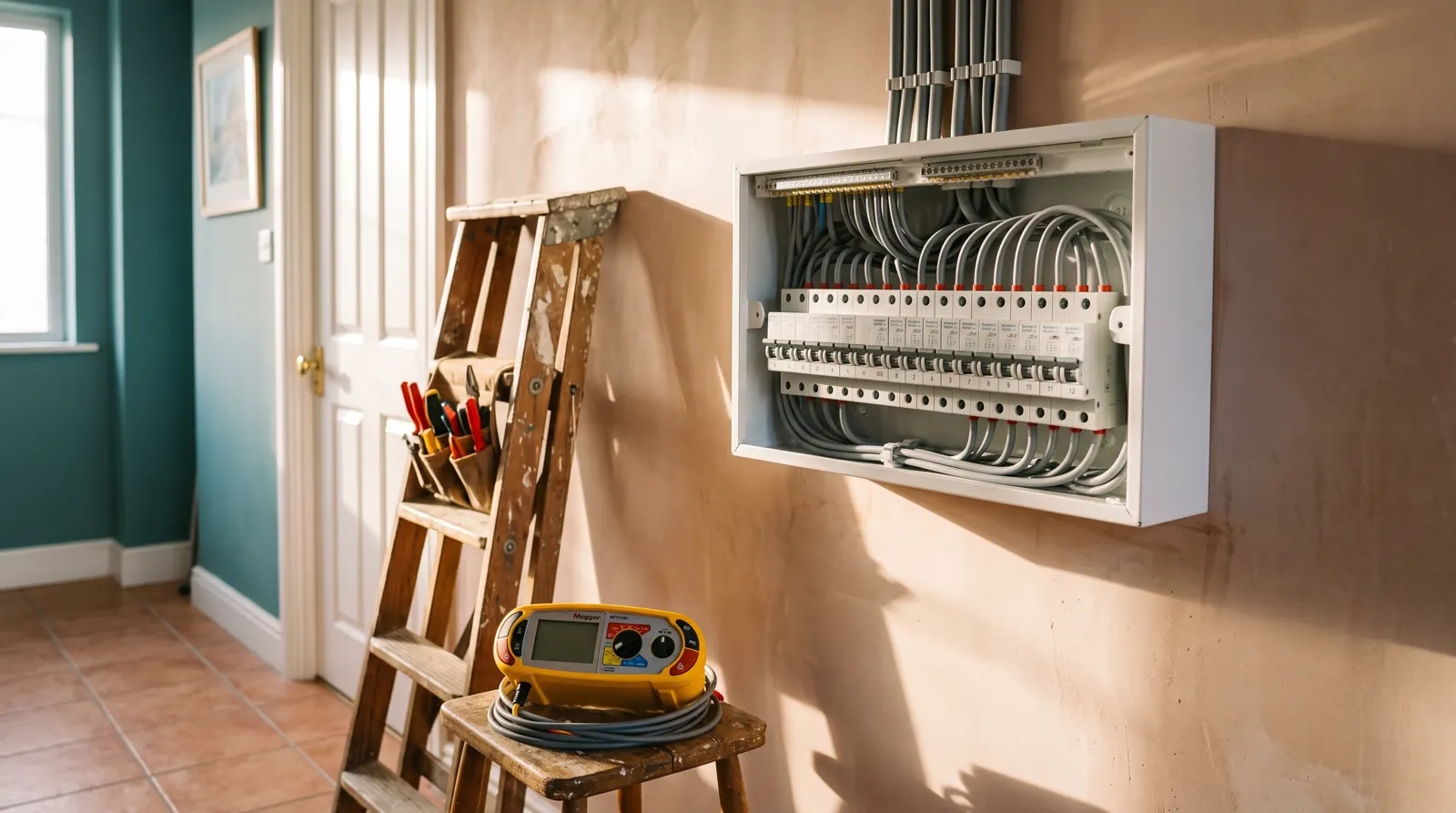
An EICR will identify defects, circuit condition, earthing arrangements and suitability of protective devices. We’ll explain whether targeted remedial work, a consumer-unit upgrade or a full renewal is appropriate and recommend actions aligned with BS 7671 and Part P.
Signs a rewire is due
- Fuses keep blowing or circuits trip repeatedly during normal use.
-
Usually means the circuit is overloaded, there’s a persistent fault, or protective devices are failing and need investigation.
-
Socket faces feel warm, look discoloured or wobble when you plug something in.
-
Often indicates ridley connections, overheating or worn sockets that can be a fire risk.
-
Your lights dim, flicker or change brightness when you switch on a kettle, hairdryer or other appliance.
-
Typically a sign of poor or ageing wiring, ridley connections or inadequate capacity for modern loads.
-
You can see aluminium wiring that looks dull, green/blue or has flaky joints.
-
Aluminium corrodes and can form poor, high-resistance connections that overheat and fail.
-
Rubber-covered cables crack or crumble when you move them or lift carpets.
-
Old rubber insulation (VIR) becomes brittle and exposes live conductors, increasing shock and fire risk.
-
You smell burning or a hot, slightly chemical smell from sockets, switches or the consumer unit.
-
Usually means overheating or arcing inside fittings or wiring and requires immediate attention.
-
Switches or socket covers feel hot to the touch.
-
Points to overloaded or ridley connections that are overheating.
-
Cable sheaths are damaged, frayed or cut where they pass through floors or walls.
-
Exposed conductors can short or cause shocks; the wiring is compromised.
-
You notice scorch marks, blackening or charring around sockets, switches or the consumer unit.
-
Evidence of past arcing or overheating and a serious safety concern.
-
The consumer unit (fuse box) looks old and lacks modern switches or trip devices.
-
Older consumer units may not provide proper protection; upgrades can improve safety.
-
You see frequent or unusual sparks from sockets or switches when plugging in appliances.
-
Sparks suggest ridley connections or damaged wiring that could lead to fire.
-
Warm or discoloured wiring in lofts, under floors or behind appliances.
- Heat damage or deteriorating insulation that should be checked by a professional.
If you suspect any of these, don’t remove covers or touch exposed parts — isolate the circuit if possible and call a qualified electrician urgently.
What a rewire costs in Hartley
Typical costs for rewiring in Hartley depend on the job scope, with a full three-bedroom rewire generally priced between £4,500 and £8,000. Below are typical jobs, their prices and what’s included.
| Job | Price | What's included |
|---|---|---|
| Full three-bedroom rewire | £4,500–£8,000 | Parts, labour, testing, certification, VAT; circuit design, consumer unit work, safe cable routes and BS 7671 verification; fixed written quote after survey |
| Partial rewire | £1,200–£3,000 | Parts, labour, testing, certification and VAT |
| Consumer unit replacement | £500–£700 | Parts, labour, testing, certification and VAT |
| EICR, up to three bedrooms | £150–£250 | Inspection and report; testing and certification; VAT |
Not included: plaster repairs, decoration, asbestos removal, DNO supply-upgrade charges, scaffold or access equipment, and any unqualified or DIY work.
How long a rewire takes, room by room
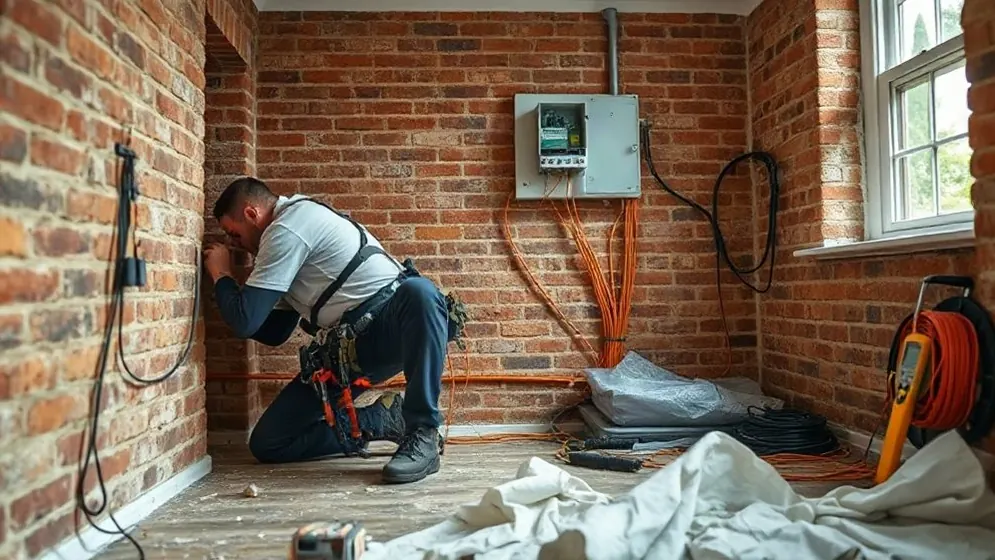
Although programme length depends on access, cable routes and the property’s construction, we’d typically allow 5–10 working days for a full three-bedroom rewire in Hartley. We sequence safe isolation, first-fix cabling, second-fix accessories, inspection and testing to BS 7671, then issue certification.
| Area | Typical duration | Core work |
|---|---|---|
| Kitchen | 1–2 days | Dedicated circuits, Socket layout |
| Bedrooms | 1–2 days | Lighting, sockets, switched spurs |
| Bathroom | 1 day | RCD protection, bonding checks |
Room timelines vary where solid walls, listed fabric or concealed services restrict routes. We confirm circuit design before work starts, including cooker, shower and smoke-alarm requirements. Final testing verifies continuity, insulation resistance, polarity, earth-fault loop impedance and RCD operation. Any remedial findings are resolved before energisation and handover.
Living in the house while we work
You can usually remain in your Hartley home during a rewire, provided we can safely isolate circuits, maintain a clear work area and agree access room by room. We’ll plan temporary power where practicable, but expect scheduled shutdowns while we replace cables, install accessories and test circuits. We won’t energise incomplete work, and children, pets and visitors must stay clear of open floorboards, wall chases, tools and cable routes.
Before starting, we’ll confirm living arrangements, including access to cooking, washing and sleeping spaces. Move valuables, clear furniture from work zones and tell us about medical equipment or essential appliances so we can assess safe alternatives. Noise management matters: chasing walls, drilling and lifting floors create disruption, so we’ll coordinate louder tasks within agreed daytime hours. On completion, we test, inspect and certify the installation before final energisation.
Rewiring a period or listed property
Where listed‑building consent may apply — notably for town centre listed façades and the conservation areas around Ridley and the riverfront — we coordinate the electrical design with the borough council’s heritage and conservation officers and any specific requirements for those Hartley listings before work begins.
Our installations in Hartley comply with BS 7671 and Part P requirements for Kent properties, including suitable earthing, RCD protection and certification issued for the local address. We specify locations and methods clearly for each Hartley property before installation.
Making good, and what we do and do not put back
Before a rewire starts, we’ll agree in writing which surfaces we’ll open and the level of making good included in the fixed price. We plan cable routes to minimise disruption, but safe containment, prescribed cable zones and access to structural voids must take priority over avoiding every opening.
We’ll lift boards carefully where practical, label them and refit sound sections; floorboard restoration, including replacing damaged timber, sanding or refinishing, is normally excluded unless quoted. We’ll make safe chases, secure back boxes, refit accessible boards and leave walls ready for follow-on finishing. We don’t normally reinstate decorative plaster, match lath-and-plaster textures, redecorate, retile, refit carpets or repair concealed defects uncovered during access. If your home has fragile or historic finishes, we’ll identify suitable routes and agree specialist repairs before work begins.
Certificates and Building Control
Alongside the agreed making-good scope, we’ll document the electrical work correctly and manage any Building Control notification required. Under Part P of the Building Regulations, a full rewire involves new circuits and is notifiable work. Replacing a consumer unit, or electrical work in a bathroom or another special location, may also require notification.
As an NICEIC-approved, Part P-registered contractor, we can self-certify eligible work and notify Building Control on your behalf. This avoids you arranging separate inspection and provides a clear compliance trail. We’ll issue the appropriate electrical certificates: an Electrical Installation Certificate (EIC) for new circuits or a consumer unit, and a Minor Electrical Installation Works Certificate for qualifying additions to an existing circuit. An EICR is different: it reports on an installation’s condition and doesn’t certify new work.
Recent rewires near New Ash Green
Around New Ash Green, we assess each rewire against the property’s age, existing cable types and planned electrical load, rather than applying a standard layout. This is particularly important across New Ash Green developments, where original installation dates, extension work and modern appliance demand can vary markedly between homes.
We inspect accessible wiring, earthing and bonding arrangements, consumer unit protection, circuit loading and signs of alteration before specifying work. Your proposed kitchen, electric shower, induction hob, home office or chargepoint can affect circuit design, cable sizing and protective devices. We then provide a fixed written quotation and a clear scope of works.
Community feedback often highlights concerns about disruption, so we plan containment routes, isolate circuits safely and keep essential supplies available where practicable. On completion, we test every circuit and issue the appropriate electrical certification.