What this costs and how fast we can help
Most faults are traced within one to two hours and fault finding is charged at £80 per hour; we’ll give you a fixed written price before work starts so your bill won’t exceed the quote.
We’ll isolate concerns safely, test methodically and explain findings clearly. Fault finding covers labour, testing and VAT. Emergency visits are £120 per hour (first hour minimum, VAT). Our day rate is £600 and includes labour, testing and VAT. Parts and certification are included where applicable.
Our response times and call-out availability depend on demand, location and whether safety is affected. We offer appointment slots from 7am–6pm, Monday to Saturday, plus a 24-hour emergency line. Priority scheduling is available where there’s immediate risk; switch off power if safe and don’t disturb damaged equipment.
The faults we are called out for most
- Your consumer unit keeps tripping and cutting power to parts of the house.
-
Usually means a faulty circuit, overload or earth-fault that needs locating and fixing.
-
Some sockets or lights suddenly lose power or stop working.
-
Often caused by a blown fuse, tripped breaker, ridley connection or damaged wiring on that circuit.
-
Lights flicker or dim when you turn on the kettle or other appliances.
-
Typically indicates an overloaded circuit or a poor connection that can’t cope with the sudden load.
-
Sockets or switches feel warm, are discoloured, or you see scorch marks.
-
A sign of ridley or overheating connections that can be a fire risk and need urgent attention.
-
Power cuts in a circuit only happen when certain equipment is running.
-
Suggests a fault linked to that appliance or an intermittent wiring issue that appears under load.
-
Fuses or breakers keep blowing/resetting repeatedly on the same circuit.
-
Usually points to a persistent overload, short circuit or earth-leakage that needs investigation.
-
Plug sockets have cracked faceplates or damaged sockets.
-
Indicates wear or impact damage; the socket may be unsafe and should be replaced.
-
Older wiring in the house looks frayed, brittle or uses old rubber/VIR cables.
-
Common in period properties and often means the wiring is degraded and may need upgrading or closer inspection.
-
You notice damp or water ingress near electrical fittings and then trips occur.
-
Moisture can cause earth faults or corrosion, creating dangerous conditions that must be dealt with promptly.
-
Problems only show up intermittently or under certain weather/temperature conditions.
- Points to an intermittent connection or insulation issue that’s triggered by movement or changing conditions and needs careful testing.
Safe checks to try before you call
Before calling an electrician, you can try a few simple, low‑risk checks that do not require removing covers or touching wiring. First, establish whether the issue affects a single socket, one circuit or the whole property. You may look at the consumer unit to see whether an RCD or circuit breaker has tripped; it is generally acceptable to reset a tripped device once if it is safe to do so, but do not repeatedly reset it. (If a device keeps tripping, this indicates a persistent fault and you should stop resetting it and seek a qualified electrician.)
For appliance isolation, unplug portable items on the affected circuit and try one reset. If the supply holds, reconnect appliances one at a time to help identify a likely faulty item. You can also carry out basic meter checks such as confirming credit, emergency credit or prepayment status and checking whether nearby properties appear to have power; these checks may help distinguish a local fault from a wider supply issue. Do not remove consumer‑unit covers, test live conductors or use improvised tools.
If you notice a burning smell, heat, sparking, water ingress or repeated tripping, switch the power off and contact a qualified electrician promptly. (It is a common misconception that householders can safely investigate internal wiring faults; in fact, work on electrical installations in the UK should generally be carried out by a competent person in accordance with the Electricity at Work Regulations and Building Regulations where applicable.)
Aluminium Wiring in Post-War Homes
We’ll inspect accessible terminations, cable condition and compatibility with current protective devices, working in line with BS 7671. Aluminium corrosion or poorly matched connections can increase resistance and heat, so we won’t simply tighten or replace fittings without confirming suitability.
| Check | Risk considered | Appropriate action |
|---|---|---|
| Terminations | Ridley, oxidised conductors | Test and renew approved connections |
| Accessories | Incompatible terminals | Specify suitable replacements |
| Circuit condition | Deteriorated cable | Recommend proportionate remedial work |
Where connector conversion is appropriate, we use properly rated components and follow manufacturer instructions. If the installation requires upgrading, we’ll explain the options, provide a fixed written price, and issue certification for completed work.
How we trace a fault
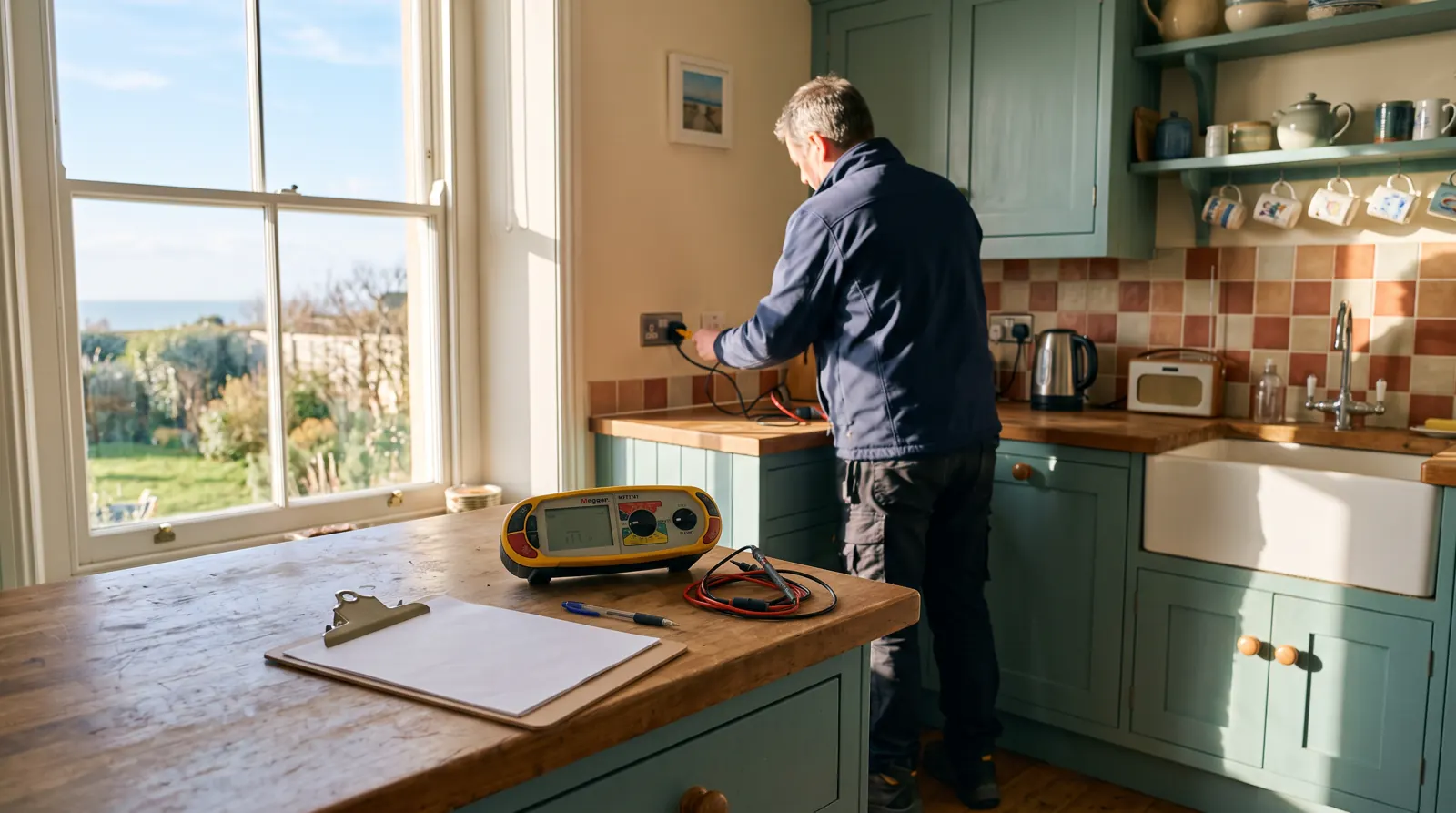
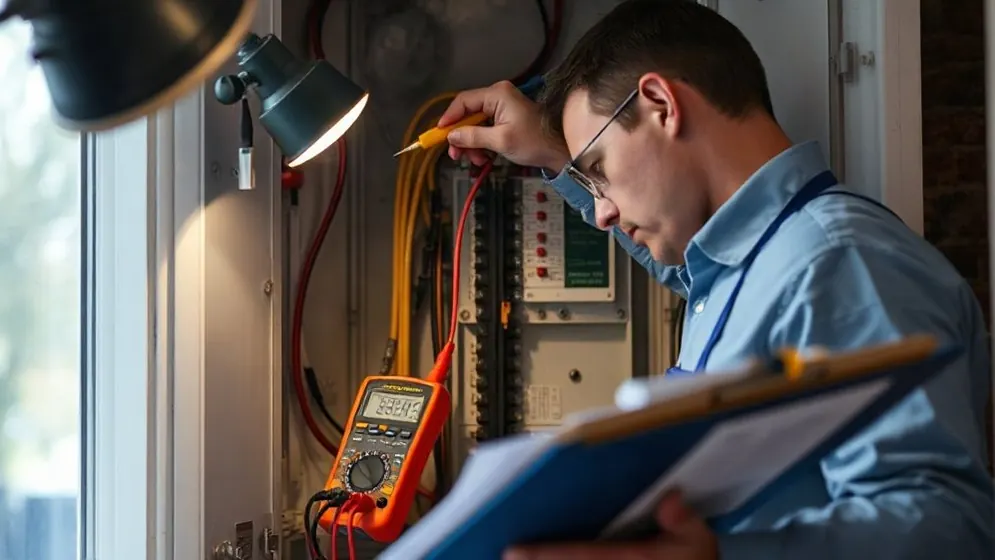
Whether the fault involves older aluminium wiring or a newer circuit, we trace it systematically rather than replacing parts by guesswork. We first make the installation safe, isolate the affected circuit where necessary and confirm dead using approved test equipment. We then listen to your description, inspect the consumer unit, accessories and visible cable routes, and check for heat damage, ridley connections, moisture or signs of deterioration.
Next, we use circuit mapping to identify exactly what each protective device serves and to narrow the search. Continuity, polarity and earth-fault loop checks help verify the circuit’s condition. Insulation testing can reveal damaged cable insulation, leakage or moisture-related faults without unnecessary disturbance. Where work involves concealed wiring or period fabric, we proceed carefully, keeping disruption to a minimum and following current wiring regulations throughout.
What it costs to put right
We’ll provide a fixed written price for identified faults covering required parts, labour, testing, certification and VAT so the bill won’t exceed the quote. We’ll explain the defect, safe repair method, estimated costs and realistic timelines before work begins.
| Job | Price | What's included |
|---|---|---|
| Fault finding | £80/hr | Diagnosis, testing and labour |
| Extra socket | £55–£75 | Parts, installation, testing, certification, VAT |
| Consumer unit replacement | £500–£700 | Supply, installation, testing, certification, VAT |
| Partial rewire | £1,200–£3,000 | Materials, labour, testing, certification, VAT |
Prices do not include plaster or decoration making good, asbestos removal, DNO supply-upgrade charges, or scaffold/access equipment.
When it is an emergency instead
A fault becomes an emergency when there is an immediate risk of electric shock, fire or property damage. If you smell burning, see smoke, hear arcing, find a hot consumer unit, or water has reached electrical equipment, do not investigate further. Keep clear, switch off the main supply only if it is safe to do so, and call our 24-hour emergency line.
If there is smoke, flame, sparking near combustible materials, or danger from fallen cables, arrange immediate evacuation and call 999; do not re‑enter until the emergency services confirm it is safe. A power cut without visible signs of damage is often the network operator’s responsibility, but repeated tripping, tingling from fittings or exposed live parts indicate a potentially dangerous fault that should be dealt with urgently by a competent electrician. We will isolate the fault, carry out the necessary safe tests and restore supply only when the installation meets applicable safety standards; note that legal duties on disconnection, repair and notification rest with the responsible parties (network operator, landlord or duty holder) as defined by the relevant regulations and not solely on any single contractor.
Older wiring around Hartley
Where necessary in these Hartley neighbourhoods we isolate circuits and test continuity, insulation resistance, polarity and earth‑fault protection, then record defects against current safety requirements applicable in the Hartley area.
The property mix in Hartley — large detached houses on a leafy private estate, inter-war ribbon development, village stock in Longfield — means no two jobs are alike. Our electricians spend much of their time on large detached houses with smart home, garden and EV work, rural supplies in Longfield, and we plan each visit around the age of the wiring rather than a one-size-fits-all checklist.